
Choosing leggings for your workout might seem straightforward, but the type you wear significantly impacts your performance and recovery. Many athletes assume all leggings provide similar benefits, yet research reveals compression leggings alter knee biomechanics and enhance blood circulation in ways regular leggings cannot. Understanding these differences helps you select workout gear that supports your training goals. Whether you prioritize joint stability during high-intensity intervals or comfort during yoga, the right leggings make measurable differences in how your body moves and recovers.
Table of Contents
- How Leggings Influence Workout Biomechanics
- Comparing Compression And Regular Leggings: Benefits And Drawbacks
- Practical Tips For Selecting Leggings That Boost Your Workouts
- Explore High-Performance Leggings And Activewear At FitnessThreads
Key takeaways
| Point | Details |
|---|---|
| Compression leggings improve biomechanics | They increase knee flexion angles and enhance inter-joint coordination during dynamic movements. |
| Enhanced recovery and circulation | Compression fabric boosts blood flow, accelerating post-workout recovery compared to regular leggings. |
| Regular leggings prioritize comfort | They offer flexibility and breathability for low-impact activities but provide minimal performance support. |
| Selection depends on workout type | Match compression leggings to high-intensity training and regular leggings to casual or flexibility-focused sessions. |
How leggings influence workout biomechanics
Compression leggings do more than look sleek. They fundamentally change how your joints function during exercise. Research shows compression leggings alter knee biomechanics, specifically increasing knee flexion angle and sagittal range of motion during jump landings. This biomechanical shift affects how force distributes through your lower body, potentially reducing injury risk during plyometric movements.
The coordination between joints matters as much as individual joint angles. Compression fabric enhances inter-joint coordination, particularly between your knee and ankle, and between your knee and hip. When these joints work in synchronized patterns, your landing stability improves and energy transfer becomes more efficient. Athletes performing box jumps, burpees, or sprint intervals benefit from this enhanced coordination, which regular leggings simply cannot provide.
Regular leggings offer a different value proposition. They prioritize unrestricted movement and breathability over biomechanical support. For activities emphasizing flexibility like yoga or Pilates, this freedom of movement becomes advantageous. The lack of compression means your muscles work without external assistance, which some athletes prefer for building proprioceptive awareness.
The biomechanical advantages of compression extend to injury prevention. By supporting proper joint alignment and reducing excessive motion at vulnerable points, compression leggings help protect knees and ankles during high-impact activities. This protective effect becomes particularly valuable for athletes returning from injury or those with joint instability. If you regularly perform explosive movements, compression leggings fit and benefits deserve serious consideration in your training wardrobe.
Compression leggings create measurable changes in how your body moves, with effects extending beyond subjective comfort to objective biomechanical improvements.
The science here is clear. Compression leggings change your movement patterns in ways that can enhance performance and reduce injury risk. Regular leggings serve different purposes, excelling in comfort and flexibility rather than biomechanical support. Your choice should align with your specific workout demands and performance goals.
Comparing compression and regular leggings: benefits and drawbacks
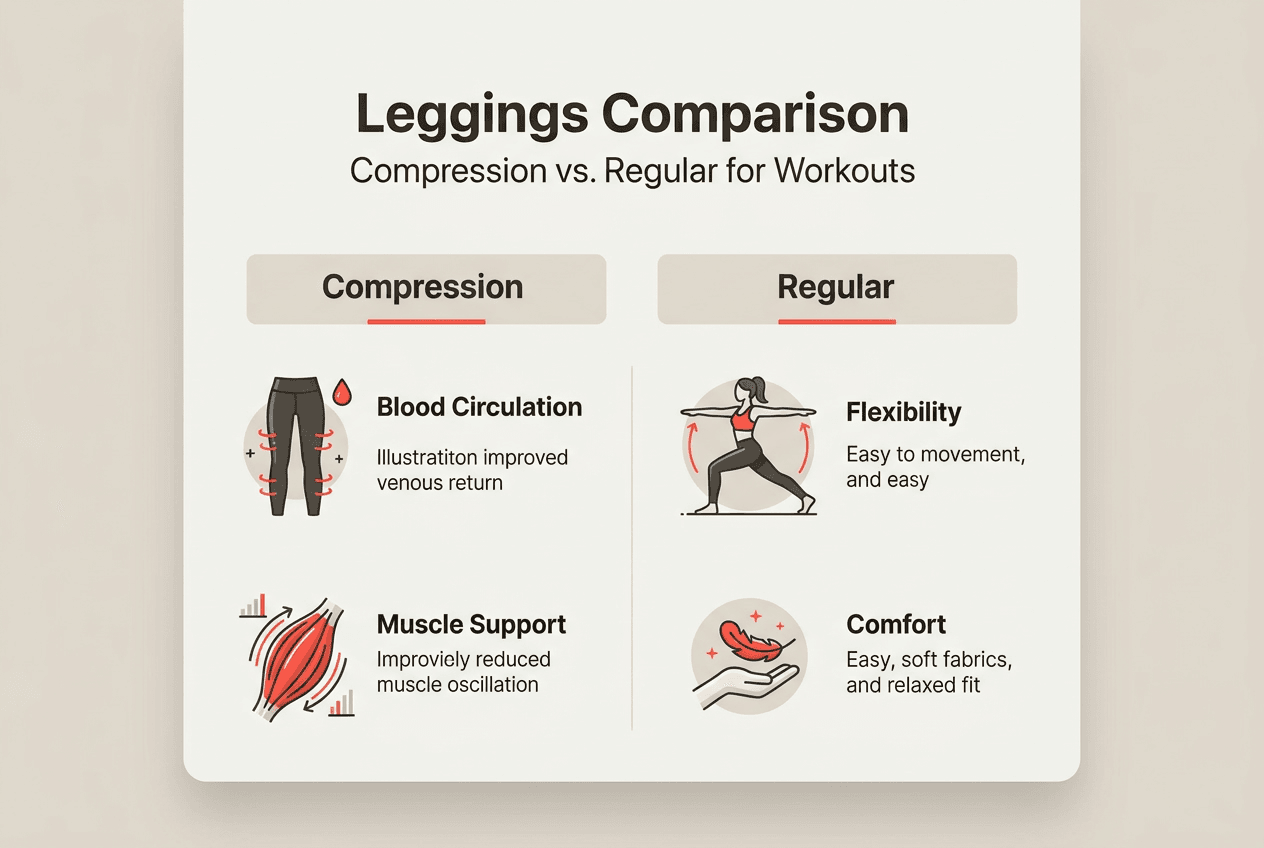
Each legging type brings distinct advantages to your training. Compression leggings enhance blood circulation and accelerate post-exercise recovery, making them ideal for athletes who train frequently or intensely. The graduated pressure these leggings apply promotes venous return, helping clear metabolic waste products from muscles faster than regular fabric allows. This circulatory benefit translates to reduced muscle soreness and quicker readiness for your next training session.
Regular leggings excel in different scenarios. Regular leggings provide comfort and flexibility without the snug feel of compression fabric. For low-impact activities like walking, stretching, or casual gym sessions, this relaxed fit prevents any sensation of restriction. Many athletes prefer regular leggings for warm-ups or cooldowns when performance support matters less than comfort.
| Feature | Compression Leggings | Regular Leggings |
|---|---|---|
| Blood circulation | Enhanced venous return and faster recovery | Standard circulation without compression benefits |
| Joint support | Improved biomechanics and stability | Minimal structural support |
| Comfort level | Snug fit requiring proper sizing | Relaxed, unrestricted feel |
| Best for | High-intensity training, plyometrics, running | Yoga, Pilates, casual workouts, lifestyle wear |
| Price range | Typically higher due to specialized fabric | Generally more affordable |
Fit becomes critical with compression leggings. They must feel like a gentle hug rather than a tourniquet. Too tight and they restrict movement, defeating their biomechanical benefits. Too loose and the compression becomes ineffective. Most athletes need to size carefully, sometimes trying multiple sizes to find the sweet spot where support meets comfort. Regular leggings options offer more forgiving fit tolerances.
Pro Tip: Test compression leggings during a dynamic warm-up before committing to a full workout. Perform squats, lunges, and jumping jacks to ensure the fabric supports without restricting your natural movement patterns.
The drawbacks matter too. Compression leggings can feel restrictive during the first few wears as your body adjusts to the pressure. They also require more careful washing to maintain elasticity. Regular leggings lose shape faster with repeated wear but feel immediately comfortable. Neither type is universally superior. Your workout intensity, duration, and personal preferences should guide your selection.
Some athletes adopt a hybrid approach, wearing compression leggings choices for intense training days and switching to regular leggings for recovery sessions or flexibility work. This strategy maximizes the benefits of each type while avoiding the potential downsides of wearing compression fabric constantly. Listen to your body and adjust your legging selection based on how you feel and what your training demands.
Practical tips for selecting leggings that boost your workouts
Selecting the right leggings requires more than grabbing your usual size. Start by measuring your thighs, hips, and inseam to compare against brand-specific size charts. Compression leggings vary significantly between manufacturers. What fits perfectly from one brand might feel restrictive or loose from another. Taking measurements eliminates guesswork and reduces return hassles.
Compression leggings should fit like a gentle hug, maximizing circulatory benefits without creating uncomfortable pressure points. When trying them on, perform a full squat. The fabric should stretch smoothly without digging into your skin or creating excessive bunching behind your knees. If you see significant compression marks on your skin after removing the leggings, size up.
Match your leggings to workout intensity using this framework:
- High-intensity interval training, plyometrics, or running: Choose compression leggings for biomechanical support and enhanced circulation.
- Strength training with heavy lifts: Either type works, but compression provides additional joint stability during explosive movements.
- Yoga, Pilates, or stretching: Regular leggings offer unrestricted flexibility for deep poses and extended holds.
- Casual gym sessions or lifestyle wear: Regular leggings provide comfort without the snug feel of compression fabric.
- Recovery days or active rest: Consider regular leggings to give your body a break from compression while maintaining light activity.
Material composition affects performance beyond compression level. Look for moisture-wicking fabrics that pull sweat away from skin, keeping you dry during intense sessions. Four-way stretch ensures the leggings move with you through full ranges of motion. Squat-proof opacity matters for confidence during floor exercises or bent-over positions. Check reviews specifically mentioning these features before purchasing.
Waist height influences both comfort and functionality. High-waisted leggings provide core support and stay in place during dynamic movements. Mid-rise options work well for athletes who prefer less abdominal coverage or find high waists restrictive. The waistband should sit flat against your skin without rolling down during exercise or cutting into your abdomen when seated.
Pro Tip: Replace leggings showing visible thinning, loss of elasticity, or fading compression. Worn fabric loses its supportive properties, reducing the biomechanical and circulatory benefits that make compression leggings worthwhile.
Consider pocket placement if you carry your phone, keys, or cards during workouts. Side pockets work well for phones during running, while back pockets suit strength training sessions. Some compression leggings integrate pockets without compromising the fabric’s compressive properties. Choose leggings by activity type to ensure features align with your specific training needs.
Color and style matter for motivation. Athletes who feel confident in their workout gear often push harder during training. Choose colors and patterns that energize you, whether that means bold prints or classic neutrals. The psychological boost from wearing gear you love translates to better workout consistency and effort.
Explore high-performance leggings and activewear at FitnessThreads
Finding leggings that match your training demands becomes simpler when you explore options designed specifically for active lifestyles. FitnessThreads specializes in gym clothes and activewear combining performance features with modern style. Every piece uses moisture-wicking, four-way stretch fabrics that support intense workouts while maintaining comfort during lifestyle wear.

Whether you need compression leggings for high-intensity training or regular leggings for flexibility-focused sessions, the collection offers squat-proof, breathable options suited to various activities. Explore coordinating sports bras, tank tops, and accessories to build a complete workout wardrobe that moves with you through every training phase. Quality construction ensures your gear maintains its supportive properties through countless wash cycles and intense sessions.
FAQ
What are the key benefits of compression leggings in workouts?
Compression leggings improve blood flow, support joint function, and accelerate post-exercise recovery. They enhance biomechanics by increasing knee flexion angles and improving inter-joint coordination during dynamic movements. These benefits make them particularly valuable for high-intensity training, plyometrics, and activities requiring explosive power.
Can regular leggings be effective for all types of workouts?
Regular leggings work best for low-impact or flexibility-focused activities like yoga, Pilates, and casual gym sessions. They offer comfort and unrestricted movement but provide minimal biomechanical support compared to compression options. For high-intensity or explosive training, compression leggings deliver superior performance benefits.
How should compression leggings fit to maximize benefits?
Compression leggings fit should feel like a gentle hug without creating restriction or discomfort. Proper fit ensures circulatory and biomechanical benefits while allowing full range of motion. Perform squats and dynamic movements when trying them on to verify the fabric stretches smoothly without digging into your skin or bunching behind joints.
Do compression leggings aid post-exercise recovery?
Yes, compression leggings enhance blood circulation and speed recovery by promoting venous return and clearing metabolic waste from muscles faster. Recent scientific studies widely support these recovery benefits. Athletes who train frequently or intensely often notice reduced muscle soreness and quicker readiness for subsequent training sessions when wearing compression leggings during and after workouts.