
You invest in high-performance workout clothes to stay comfortable and dry through intense training sessions, but improper care can quickly degrade moisture-wicking properties, cause persistent odors, and shorten your gear’s lifespan. Many fitness enthusiasts struggle with activewear that loses its stretch, develops stubborn smells, or fades after just a few washes. This guide delivers expert-backed care instructions to preserve your synthetic workout clothes’ functionality and extend their durability. Following these proven techniques keeps your gear performing at its best through countless workouts.
Table of Contents
- Understanding Workout Clothes And Why Care Matters
- Preparing To Wash: What You Need And Essential Practices
- Washing And Drying Workout Clothes: Step-By-Step Guide
- Troubleshooting Common Issues And Maintaining Freshness
- Explore High-Performance Workout Gear At FitnessThreads
Key takeaways
| Point | Details |
|---|---|
| Wash separately | Synthetic workout clothes need separate washing to protect delicate fibers and specialized coatings from damage. |
| Use mild detergent | Harsh chemicals strip moisture-wicking properties and degrade performance fabrics quickly. |
| Hand wash cold | Cold water hand washing preserves elasticity and heat-reflective coatings better than machine washing. |
| Air dry in shade | Direct sunlight causes UV degradation and color fading in synthetic fibers. |
| Wash promptly | Removing damp clothes immediately prevents odor-causing bacteria from multiplying in trapped sweat and oils. |
Understanding workout clothes and why care matters
Workout clothes primarily use synthetic fibers like polyester, nylon, and spandex engineered to wick sweat and dry rapidly during physical activity. These hydrophobic materials transport moisture away from your skin through capillary action, keeping you comfortable during intense sessions. Unlike cotton, which absorbs moisture and dries slowly, synthetic performance fabrics excel at moving sweat to the surface where it evaporates quickly.
However, these same properties create challenges. Synthetic fibers trap oils, dead skin cells, and bacteria that cause stubborn odors even after washing. The hydrophobic nature that repels water also holds onto body oils and sweat residues. This buildup degrades fabric performance over time and creates breeding grounds for odor-causing microbes.
“Moisture-wicking activewear acts like a pump, lifting sweat off your skin and pumping it out to the air, leaving you dry and comfortable.”
Proper care preserves the specialized coatings, elasticity, and breathability that make performance fabrics effective. Harsh chemicals, excessive heat, and abrasive washing damage these properties permanently. Understanding fabric science helps you make informed decisions about cleaning methods.
Key fabric properties to protect:
- Moisture-wicking coatings that transport sweat
- Four-way stretch for unrestricted movement
- Antimicrobial treatments that resist odor
- UV protection built into fibers
- Compression features that support muscles
Exploring gym outfits for women reveals how modern activewear combines these technologies for maximum performance. Maintaining these features requires gentle, targeted care that respects the fabric’s engineering.
Preparing to wash: what you need and essential practices
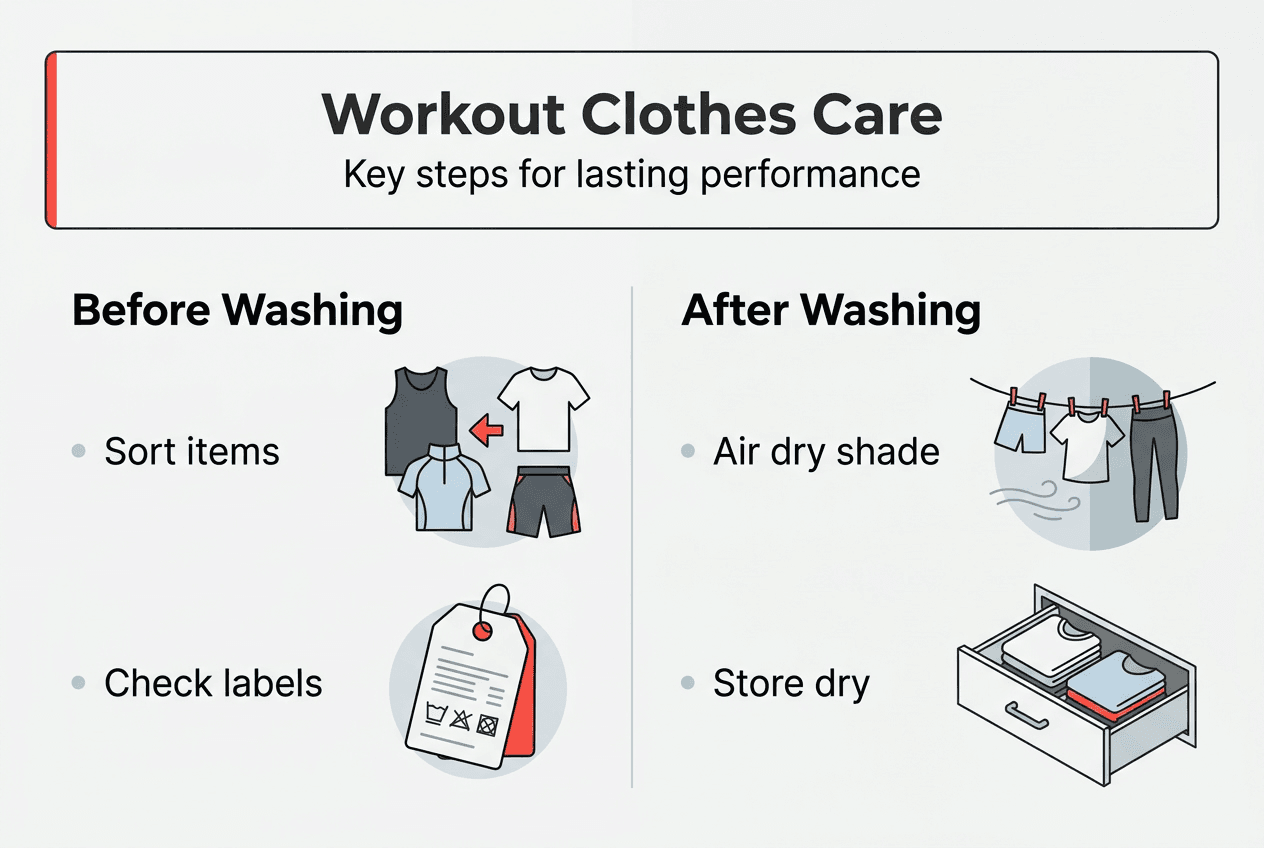
Sorting workout clothes separately protects delicate synthetic fibers and specialized coatings from damage caused by heavier garments or harsh detergents used on regular laundry. Mixing activewear with jeans or towels creates friction that causes pilling and micro-tears in technical fabrics. Dedicated washing also prevents color transfer and ensures appropriate water temperature.
Gather mild detergent specifically formulated for synthetic activewear. Standard detergents often contain enzymes and additives designed for cotton that clog the microscopic pores in performance fabrics. Avoid bleach and fabric softeners completely, as these chemicals strip moisture-wicking properties and damage elasticity permanently.
Check care labels before washing. Manufacturers provide specific temperature recommendations and washing instructions based on the fabric blend and coatings used. Most performance fabrics require cold water to preserve heat-reflective treatments and maintain stretch. Hot water breaks down elastic fibers and can melt adhesives used in seamless construction.
Pre-treat heavily soiled areas with gentle stain removers designed for delicate fabrics. Focus on underarms, collars, and inner thighs where sweat and body oils concentrate. Let the treatment sit for 10 minutes before washing to break down trapped residues without harsh scrubbing.
Essential preparation steps:
- Turn garments inside out to protect outer surfaces
- Close zippers and fasten hooks to prevent snagging
- Empty pockets and remove any accessories
- Separate dark colors from lights initially
- Check for damage or loose threads needing repair
Pro Tip: Keep a dedicated laundry bag for workout clothes in your gym bag. This prevents damp garments from sitting in enclosed spaces where bacteria multiply rapidly, and makes sorting easier when you get home.
Understanding where to buy gym clothes helps you invest in quality pieces worth maintaining properly. Premium activewear uses advanced fabric technologies that deliver superior performance when cared for correctly. Preparation prevents damage and maximizes cleaning effectiveness.
Washing and drying workout clothes: step-by-step guide
Hand washing in cold water provides the gentlest cleaning method that preserves heat-reflective coatings and maintains fabric elasticity better than machine washing. Fill a clean basin with cold water and add the recommended amount of mild detergent. Submerge your workout clothes completely and let them soak for 15 minutes to loosen trapped oils and sweat.
Gently agitate the garments by swishing them through the water. Avoid harsh rubbing, twisting, or wringing that stretches fibers and damages seams. Focus on heavily soiled areas with light pressure using your fingertips. The detergent and water do most of the cleaning work without aggressive mechanical action.
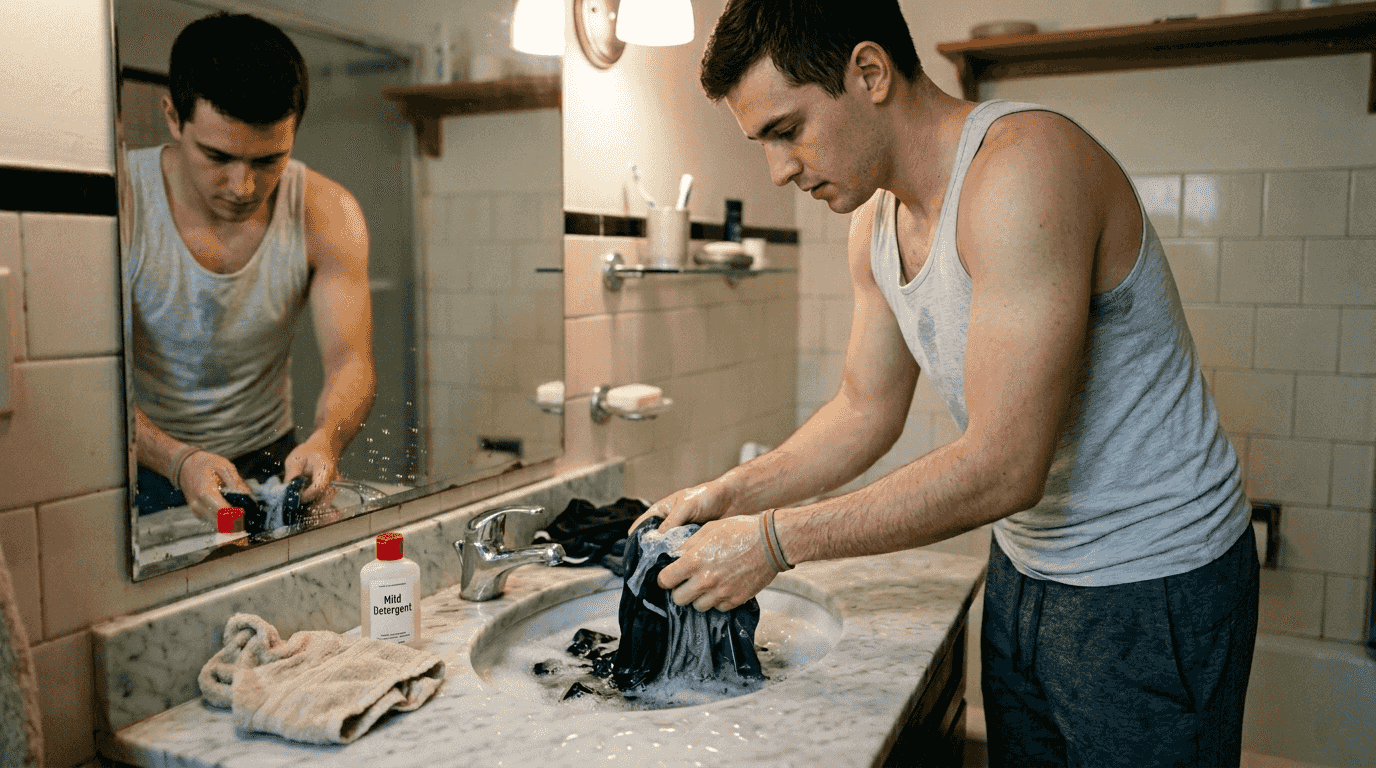
Rinse thoroughly under cold running water until all detergent residues disappear. Soap buildup clogs the microscopic pores in technical fabrics, reducing breathability and moisture-wicking performance. Continue rinsing until the water runs completely clear and no suds remain.
Never use fabric softeners or bleach during washing. Fabric softeners coat fibers with waxy residues that block moisture transport. Bleach corrodes synthetic materials and destroys antimicrobial treatments permanently. These chemicals provide no benefit for performance fabrics and cause irreversible damage.
After rinsing, press water out gently by laying the garment flat and applying light pressure. Never wring or twist wet activewear, as this stretches elastic fibers beyond recovery. Roll the garment in a clean towel and press to absorb excess moisture.
Air dry garments in shade away from direct sunlight to prevent UV degradation that weakens synthetic fibers and fades colors. Hang items on a drying rack or lay flat on a clean surface with good air circulation. Avoid tumble drying, which applies heat that shrinks fabrics, melts elastic components, and damages moisture-wicking coatings.
| Fabric Type | Water Temperature | Detergent | Drying Method | | — | — | — | | Polyester/Nylon | Cold (60-80°F) | Mild synthetic | Air dry, shade | | Spandex blend | Cold (60-80°F) | Gentle, no enzymes | Flat dry, shade | | Compression wear | Cold (60-80°F) | Sport-specific | Hang dry, shade | | Moisture-wicking | Cold (60-80°F) | Technical fabric | Air dry, shade |
Pro Tip: Wash workout clothes immediately after training sessions. Bacteria multiply exponentially in damp, warm environments. Washing within 24 hours prevents odor-causing microbes from establishing colonies deep in fabric fibers.
Signs your activewear needs replacement:
- Permanent loss of stretch or sagging
- Persistent odors that survive proper washing
- Visible color fading or fabric thinning
- Pilling or surface damage from wear
- Seams separating or stitching failing
Learning proper drying techniques extends your workout clothes’ functional lifespan significantly. Patience during drying pays dividends in maintained performance and appearance.
Troubleshooting common issues and maintaining freshness
Bacteria consuming sweat, oils, and dead skin trapped in synthetic textiles cause the persistent odors that plague workout clothes. These microorganisms thrive in the warm, moist environment created during exercise. Standard washing sometimes fails to eliminate bacteria colonies embedded deep in fabric fibers, leading to smells that return immediately when you start sweating.
Immediate post-workout care prevents bacterial proliferation by removing the damp environment microbes need to multiply. Never leave sweaty clothes in a gym bag or hamper for extended periods. Air them out immediately or wash within hours of your training session.
Avoid wearing the same workout clothes multiple times without washing. Each wear adds layers of body oils, sweat salts, and dead skin cells that accumulate in fabric pores. This buildup creates stubborn odor problems and degrades moisture-wicking performance progressively.
| Problem | Common Cause | Best Practice Solution |
|---|---|---|
| Persistent odor | Bacteria in fabric fibers | Wash immediately, use antimicrobial detergent |
| Loss of stretch | Heat damage or overwashing | Hand wash cold, air dry only |
| Color fading | UV exposure or harsh chemicals | Dry in shade, avoid bleach |
| Reduced wicking | Detergent buildup | Rinse thoroughly, use sport detergent |
| Fabric pilling | Friction from mixed laundry | Wash separately, turn inside out |
Use detergents with antimicrobial properties specifically designed for activewear. These formulas contain ingredients that kill odor-causing bacteria without damaging synthetic fibers. Sport-specific detergents also rinse cleaner than standard products, preventing residue buildup.
Common freshness mistakes:
- Storing damp clothes in enclosed spaces
- Using too much detergent per load
- Skipping the rinse cycle completely
- Mixing workout clothes with regular laundry
- Ignoring manufacturer care instructions
Pro Tip: Store clean workout clothes in a dry, well-ventilated area after washing. Closets with poor air circulation can develop musty odors that transfer to fabrics. Use breathable storage containers or open shelving for activewear.
Replace workout clothes showing significant degradation signs. Fabrics that no longer wick moisture effectively or have lost compression properties cannot support your training properly. Investing in new gear maintains optimal performance and comfort during workouts.
Exploring methods for reducing bacteria and odor in athletic fabrics helps you maintain freshness long-term. Quality activewear paired with proper care delivers years of reliable performance.
Explore high-performance workout gear at FitnessThreads
Now that you understand proper activewear care, discover workout clothes engineered to maximize these maintenance techniques. FitnessThreads offers athletic apparel crafted from advanced synthetic fabrics that respond exceptionally well to the gentle care methods described above. Each piece uses moisture-wicking technology designed for durability when maintained correctly.

Explore options like the Velocity gym sweatshirt or Breeze sports t-shirt that combine performance with longevity. These garments benefit directly from proper washing and drying techniques, delivering consistent comfort through countless training sessions. Quality construction paired with informed care maximizes your fitness investment and keeps you performing at your best.
FAQ
How do I prevent my workout clothes from smelling bad?
Wash workout clothes promptly after each use with mild detergent formulated for synthetic fabrics. Avoid letting damp garments sit in gym bags or hampers where bacteria multiply rapidly in warm, moist conditions. Using antimicrobial sport detergents eliminates odor-causing microbes more effectively than standard products.
Can I machine wash my synthetic workout clothes?
Hand washing in cold water best preserves specialized coatings and fabric elasticity that machine agitation can damage. Machine washing is possible using gentle cycles and mesh bags, but increases risk of micro-tears and accelerates degradation. Always use cold water and skip the spin cycle to minimize stress on synthetic fibers.
Why should I avoid fabric softeners and bleach?
Fabric softeners deposit waxy coatings that clog technical fabric pores, eliminating breathability and moisture-wicking capabilities completely. Bleach corrodes synthetic fibers chemically and destroys antimicrobial treatments instantly. Both products provide zero benefits for performance activewear and cause permanent, irreversible damage to specialized fabric properties.
How do I dry workout clothes without damaging them?
Air dry activewear in shade away from direct sunlight, which causes UV degradation and rapid color fading in synthetic materials. Hang garments on racks or lay flat with good air circulation, avoiding tumble dryers that apply damaging heat. High temperatures shrink fabrics, melt elastic components, and destroy moisture-wicking coatings permanently. Learn more about proper drying techniques for optimal results.